
Whatnot Seller Fees Explained: What Sellers Actually Pay
This blog post may contain affiliate links.
If you are thinking about selling on Whatnot, one of the smartest things you can do first is understand is how much Whatnot Seller Fees are calculated. I always like to know what platform fees look like before I invest time listing inventory, setting up shows, and shipping orders. The good news is that Whatnot can still be a profitable platform, especially if you source items at low cost and move inventory quickly.
In this guide, I am breaking down whatnot seller fees in simple language so you know what to expect. I will also share practical examples, tips to protect your profits, and how I would personally think about fees before going live.
What Are Whatnot Seller Fees?
Whatnot seller fees are the charges sellers pay when an item sells on the platform. These fees help cover payment processing, marketplace operations, and the tools sellers use to host live shows and auctions.
Like most selling platforms, Whatnot takes a portion of each completed sale. If you are brand new, that may sound frustrating at first. I try to look at it differently. You are paying for access to buyers, built in traffic, live auction tools, and a platform designed to help items sell quickly. Also, online selling platforms get huge audiences so you have to do very little marketing and promotions so that is worth the extra fee!
Curious about Whatnot? Get your $15.00 referral credit here!

How Much Does Whatnot Charge Sellers?
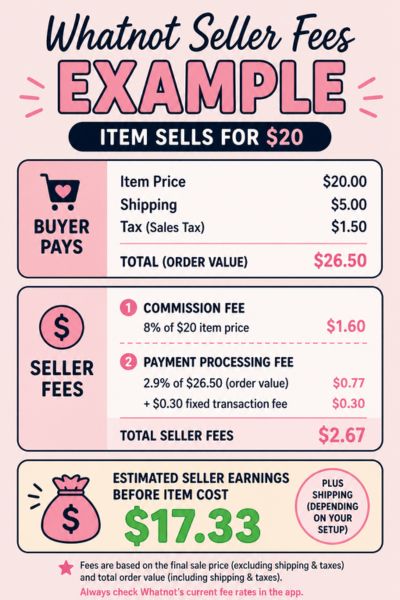
The exact fee structure can change over time, so it is always smart to review the latest seller terms directly inside your account. At the time of writing, Whatnot calculates seller fees using two main charges: a commission fee and a payment processing fee. The commission fee is based on the item’s final sale price, excluding shipping and taxes. For many categories in the United States, Canada, and Australia, this is typically 8% of the sale price, while Coins and Money may be 4%. The payment processing fee is usually 2.9% of the total order value plus a $0.30 transaction fee, and that total order value can include the item price, shipping, and taxes paid by the buyer. This means your exact fees may vary slightly depending on the order details.
- Marketplace commission fee: 8%
- Payment processing fee: 2.9% + $0.30 (transaction fee)
- Possible optional promotional costs
- Shipping related considerations depending on setup
That is why many people search for whatnot seller fees before they start. They want to know how much money they actually keep after a sale.
Recommended Reading:
Why Fees Matter More Than You Think
A lot of new sellers focus only on the sale price. I think the smarter move is focusing on net profit. A $20 sale sounds great until you subtract platform fees, item cost, supplies, and your time. This is why I always recommend running quick math before listing inventory. If you bought something for $8 and sell it for $20, the margin may be too thin after whatnot seller fees are deducted and the time you invested in selling the item. On the other hand, an inexpensive thrifted item can still be a solid flip even at a lower selling price.
Example of Whatnot Seller Fees on a Small Sale
Let’s say you sell an item for $10. After fees and processing, you will receive less than the full sale amount. The exact total depends on the current fee structure, but the main lesson is simple. Low dollar items need to move fast or be sourced very cheaply. If I were selling lower priced items, I would batch them into themed shows, create urgency, and keep the pace moving so volume makes up for smaller profit margins.
Example of Whatnot Seller Fees on a Mid Range Sale
Now imagine a $40 collectible, clothing bundle, or vintage decor item. Even after whatnot seller fees, there is often more room for profit because the sale price is higher. This is why I like mid range inventory. It can give you enough margin to cover sourcing costs while still being attractive to buyers. You do not always need expensive luxury items to make money. Sometimes the sweet spot is affordable but desirable merchandise.
Example of Whatnot Seller Fees on a Higher Sale
A $100 sale can feel exciting, but you still need to protect your margin. Fees on higher priced items can add up quickly, especially if your cost basis was already high. If I were selling premium items, I would focus on presentation, buyer confidence, clear descriptions, and strong packaging. When people trust the seller, they are often more comfortable bidding higher.
Whatnot Seller Fees vs eBay Fees
Many online sellers compare platforms before choosing where to list. I think that is a smart move. Both Whatnot and eBay charge fees, but the selling experience is very different. Whatnot is built around live energy, urgency, and community. eBay is more search based and listing based. If I want something gone quickly, I might test Whatnot. If I want a patient buyer willing to pay top dollar, I might test eBay. That is why I always say compare profit, not just fees. Sometimes a slightly higher fee platform still wins because the item sells faster.
How I Would Price Items With Whatnot Seller Fees in Mind
When I price items, I like to work backward. I ask myself what amount I want to keep after fees, shipping considerations, and inventory cost. Then I build my starting price or auction strategy around that goal. Here are a few ideas I would use:
- Keep low cost items for fast paced auction bundles
- Reserve better items for stronger starting bids
- Group similar items together to raise order value
- Use excitement and show flow to increase bids naturally

Hidden Costs Sellers Forget
Fees are important, but they are not the only cost of selling. That is why I always try to improve sourcing first. Better buys solve many profit problems. Many new sellers forget about the extras that quietly reduce profits.
- Supplies
Mailers, boxes, tape, labels, tissue paper, and printer ink all add up over time. - Time
Running a live show takes preparation, energy, and follow up. Your time matters. - Sourcing Mistakes
If you overpay for inventory, even low fees cannot save the deal.
Are Whatnot Seller Fees Worth It?
In my opinion, whatnot seller fees can absolutely be worth it when the platform matches your inventory style. If you enjoy live interaction, fast sales, and building repeat buyers, the fees may feel fair for the opportunity. If you dislike being on camera or you prefer slow and steady fixed price listings, another platform might fit better. The best platform is the one you will actually use consistently.
Best Items to Sell Despite Fees
Some categories can handle fees better because demand stays strong or buyers enjoy the live format. The stronger the demand, the easier it is to absorb whatnot seller fees while still earning profit.
- Collectibles
Trading cards, toys, dolls, and niche hobby items often do well in live environments. - Fashion
Bundles, boutique items, and trendy finds can create bidding momentum. - Vintage Home Decor
Unique pieces can stand out quickly during a show. - Mixed Lots
Buyers often enjoy surprise bundles or reseller lots.
FAQs About Whatnot Seller Fees
Whatnot takes marketplace and payment related fees from completed sales. The exact amount can change, so I always recommend checking the latest seller terms inside the app.
Most sellers pay a percentage of the sale plus payment processing related costs. That is why many people search for whatnot seller fees before they begin.
That depends on your item category and selling style. Some sellers prefer Whatnot for speed, while others prefer eBay for fixed price listings.
In my experience, Whatnot has become a major platform with many active buyers and sellers. As with any marketplace, good communication and accurate listings matter.
Many buyers enjoy using Whatnot, especially for collectibles and live shopping. Buyers should still review seller ratings and item descriptions before purchasing.
Shipping costs vary depending on item size, weight, and order details. Buyers can usually see shipping information during checkout.
Policies can change, but sellers should aim to avoid cancellations whenever possible. Consistency helps build trust and repeat business.
I think people enjoy the live auction energy, entertainment factor, and chance to find deals in real time. It feels more interactive than traditional marketplaces.
The platform has grown quickly over the past few years. Exact numbers can change, but user interest and seller activity have clearly increased.
Giveaways are part of many live shows and promotions. Users should always follow official rules and understand that giveaway terms may vary.
Are Whatnot Seller Fees Worth It?
I think whatnot seller fees are simply part of doing business online. Every marketplace takes a cut in exchange for traffic, payment processing, and customer access. The real question is whether the platform helps you earn enough after fees to make it worthwhile. For many sellers, the answer is YES! Especially if they know how to source smart inventory and create fun live shows buyers want to return to.
Ready to Start Selling on the Whatnot App?
If you are considering selling live, do not let fees scare you away before you even start. Learn the numbers, test a few shows, improve your sourcing, and watch what actually sells. Sometimes the seller who understands profit beats the seller who only watches gross sales. I hope this helps you build smarter shows, keep more money, and do incredibly well on Whatnot. And don’t forget to: Get your $15.00 referral credit here!
For more online selling ideas check out my Pinterest Board Online Selling and Reselling Tips
This blog post may contain affiliate links. If you click on these links and make a purchase, I may earn a commission at no additional cost to you. I only recommend products or services I use and believe will add value to my readers. Please note that I am not responsible for the content, privacy practices, or services of external sites linked within the blog post.